
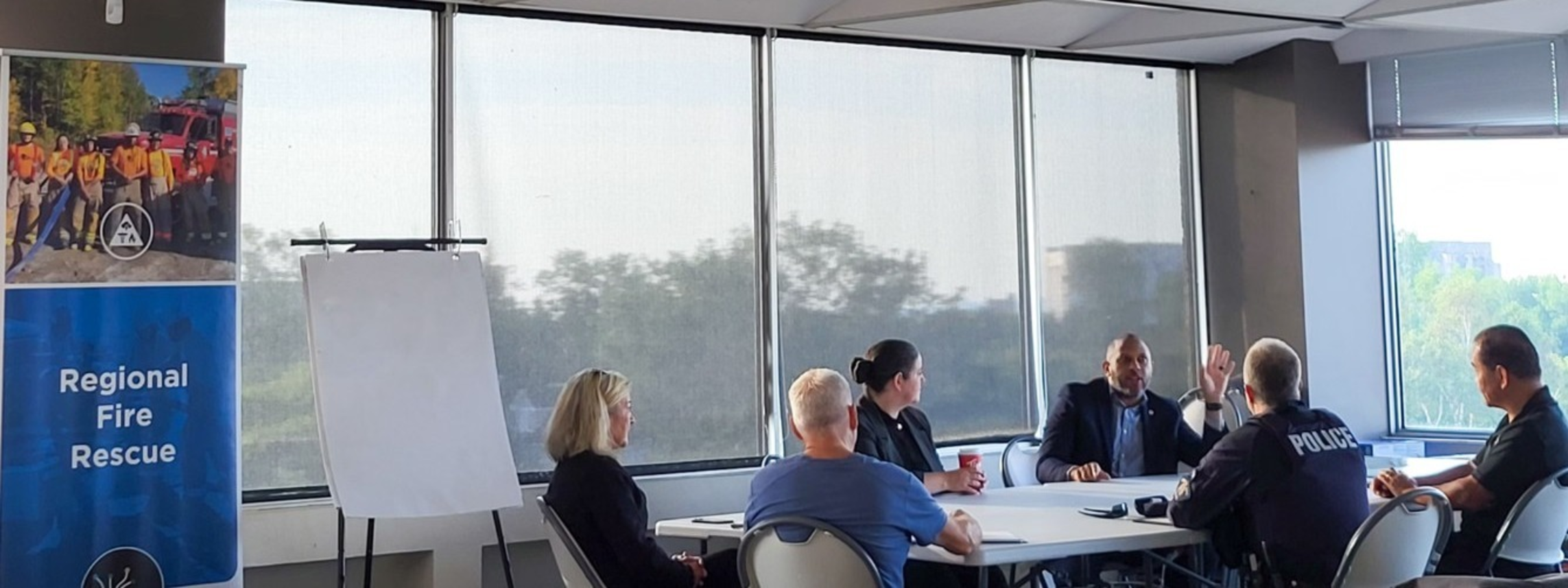
IFNA Partnership Strengthens Indigenous Wildland Fire Response
Training delivered in partnership with the Indigenous Police Chiefs of Ontario and the International Wildfire Alliance strengthens Indigenous firefighting capacity across IFNA member Nations.
Thunder Bay, ON – August 19 – As wildfire activity continues to impact Northwestern Ontario, the Independent First Nations Alliance (IFNA) is actively supporting member Nations through its Integrated Emergency Services Department while working with partners to build stronger Indigenous wildland fire response capacity for the future.
Throughout the 2026 wildfire season, IFNA's Emergency Operations Centre (EOC) have been actively monitoring wildfire activity affecting member Nations and responding at the request of communities. IFNA personnel have been deployed to support active wildfire response, including in Kitchenuhmaykoosib Inninuwug (KI) and Whitesand First Nation, while resources remain prepared to respond should additional support be requested by other member Nations.
Each response is guided by the leadership and direction of the affected First Nation. IFNA's role is to work alongside community leadership and provide the personnel, emergency coordination, planning, mapping, health supports, and other resources requested by the community.
Alongside these active response efforts, IFNA has partnered with the Indigenous Police Chiefs of Ontario (IPCO) and the International Wildfire Alliance (IWA) to expand Indigenous wildland firefighting capacity, as well as the set-up of a joint AH-IMT (All Hazards-Incident Management Team). The partnership has brought trained Indigenous wildland firefighters, incident management expertise, mentorship, and additional operational resources together in support of First Nation-led wildfire response.
Wildland fire training has been underway in the Kab Lake area for the past several weeks and will continue, providing Indigenous firefighters with practical, hands-on training and operational experience. IFNA Regional Fire Rescue personnel are participating alongside Indigenous firefighters and wildfire specialists, strengthening skills in wildland fire suppression, safety, incident response, and community protection.
The initiative also extends beyond active wildfire response. IFNA is working to strengthen fire safety planning, emergency preparedness, and local response capacity within its member Nations, with the long-term goal of ensuring communities have greater access to trained Indigenous responders and the resources needed to manage emergencies close to home.
"When wildfire threatens our communities, having trained people who understand the land, the community, and the people they are there to protect makes a difference," said Chief Donny Morris of Kitchenuhmaykoosib Inninuwug. "Building Indigenous firefighting capacity means our communities can be better prepared and have more of the skills and resources needed to respond when emergencies happen."
"First Nations know their communities best, and our role is to support their leadership with the resources and capacity they request," said Nicholas Rhone, Director of Integrated Emergency Services and EOC Commander for IFNA. "We're proud to be able to support our member Nations through active wildfire response while working with IPCO and the International Wildfire Alliance to build Indigenous firefighting capacity and an AH-MIT model that will continue to benefit our communities into the future."
The partnership between IFNA, IPCO, and the IWA builds on a shared commitment to Indigenous-led emergency management and First Nations supporting First Nations. Through training, operational experience, emergency preparedness, and coordinated response, the organizations are working together to strengthen sustainable wildfire response capacity for First Nations.